

Have you ever wondered about the mesmerizing origins of this precious metal? Gold, prized for its beauty and value, has a fascinating story that begins deep within the Earth. Understanding where gold comes from not only unveils the science behind its formation but also highlights its meaning in our culture and economy throughout history.
The Geological Journey: How Gold Formed Deep Within the Earth
In the depths of the Earth, where extreme heat and pressure coexist in a delicate balance, the formation of gold begins its unbelievable journey. This precious metal did not manifest itself in a blink but rather through a series of complex geological processes that took millions of years.Understanding this process helps answer the perennial question: where does gold come from?
The Elements of Formation
gold primarily forms during the cooling and solidification of hot magma beneath the Earth’s crust. The heat within the Earth causes the melting of rocks, forming magma that contains various minerals. Through a process known as fractional crystallization, heavier metals like gold settle out as the magma cools, gradually crystallizing and accumulating in pockets called ore deposits. The journey doesn’t stop here; these deposits can be subjected to various geological forces, such as erosion and tectonic movements.
- Magma Cooling: As magma rises towards the Earth’s surface, it cools, and metals precipitate.
- Hydrothermal Vents: Gaseous fluids rich in minerals can interact with existing rocks, depositing gold and other metals.
- Weathering and Erosion: Surface processes can break down these deposits, allowing gold to be transported by water and wind.
From Formation to Erosion
Once these ore deposits are formed within the Earth’s crust, they ofen become exposed through erosion. Water, wind, and other natural elements work continuously to wear down the Earth’s surface, eventually revealing hidden treasures. During this exposure, running water plays a crucial role in transporting gold particles downstream, leading to the formation of rivers and alluvial deposits.
The Geological Importance
The locations of these gold deposits are closely linked to geological features. Such as, areas near tectonic plate boundaries are often rich in gold due to the intense geological activity. Regions such as the Sierra Nevada in california and the Witwatersrand in South Africa are prime examples of places where geological forces have concentrated gold over millennia, making them hotspots for mining.
| Geological Feature | Gold Mining Regions | type of Gold Deposits |
|---|---|---|
| Tectonic Plate Boundaries | Sierra Nevada, USA | Resistant Quartz Veins |
| Volcanic Regions | Witwatersrand, South Africa | Conglomerate Deposits |
| Riverbeds | Aurora, Australia | Alluvial Gold |
The journey of gold from deep within the Earth to our rivers and ultimately into our hands encapsulates a remarkable tale of geological processes. While our understanding of these natural phenomena provides clarity on Earth’s treasure origin story, it also highlights the importance of sustainability in mining practices to protect our precious planet.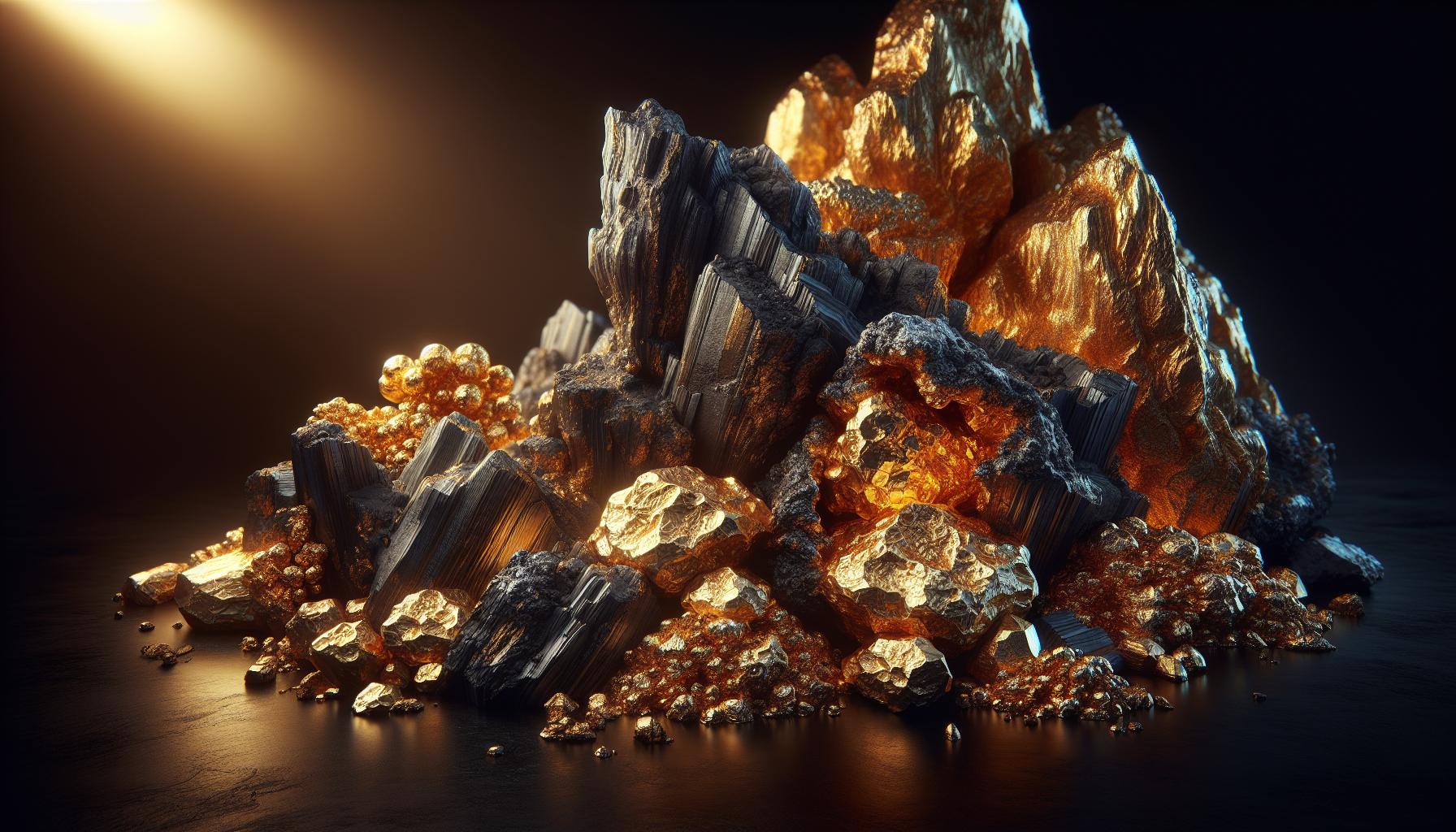
From Supernova to Soil: The Cosmic Origins of Gold
the journey of gold from the cosmos to the crust of our planet is nothing short of extraordinary, steeped in ancient cosmic events and the violent dance of celestial forces. Most fascinatingly,nearly all the gold found on Earth was forged in the hearts of stars,specifically during the cataclysmic explosions known as supernovae. These dazzling events, where stars collapse under their own gravity, create the conditions necessary for nuclear fusion, allowing heavier elements like gold to be formed in the stellar furnace.
The Birth of Gold in the Cosmos
The process begins billions of years ago when massive stars exhaust their nuclear fuel, leading to a dramatic and explosive fate. During a supernova, the intense heat and pressure enable the nucleosynthesis of heavy elements. The sequence of events unfolds as follows:
- Stellar Evolution: Massive stars fuse lighter elements, ultimately leading to iron.
- core Collapse: Once iron accumulates, nuclear fusion halts, and the core collapses, creating extremely high temperatures and pressures.
- Supernova Explosion: The outer layers are expelled into space, carrying newly formed elements, including gold.
What happens next is equally fascinating. As the remnants of supernovae scatter throughout the cosmos, these heavy elements become part of the interstellar medium. They drift through space,eventually merging with gas clouds that can condense into new stars and planets,including our own Earth. When Earth formed around 4.5 billion years ago, it accumulated a hefty dose of this primordial gold, estimated to be around 90% of Earth’s current supplies.
The Journey to Earth’s Surface
While most of the gold from the supernova originated deep in the cosmic expanse, the journey to the surface of our planet also involved a series of geological processes. After being incorporated into the Earth’s crust,gold can become concentrated in places due to various geological activities. Here’s a brief overview of these processes:
| Process | Description |
|---|---|
| Plate Tectonics: | Movement of tectonic plates can transport gold-bearing rocks closer to the surface. |
| Erosion: | Weathering breaks down rocks, releasing gold particles, which can then concentrate in riverbeds. |
| Hydrothermal Activity: | Hot fluids moving through cracks in rocks can deposit gold in concentrated veins. |
Over millions of years, these natural phenomena create places where gold is more accessible for extraction, contributing to the treasure trove that has captivated humanity throughout history. This profound connection between cosmic events and our planet’s geology invites us to appreciate gold not only as a precious metal but also as a link to the universe beyond our own world.
Gold Mining Through the Ages: A Historical Perspective
The allure of gold has captivated humanity for millennia, driving exploration, conquest, and invention. From ancient civilizations that revered it as divine to modern economies that treat it as a financial asset, the quest for gold is interwoven with human history. The story of where gold comes from and how it became a symbol of wealth and power is as varied and fascinating as the mineral itself.
Ancient Beginnings
the origins of gold mining can be traced back to the early civilizations that flourished along riverbeds filled with alluvial deposits. Ancient Egyptians demonstrated advanced mining techniques, pulling gold from the earth over 3,000 years ago. These mines not only produced gold for adornment and burial markers, such as the famous masks of pharaohs, but also laid the foundations of a rich economy. The extraction of gold reached its zenith with notable figures like Tutankhamun, showcasing gold’s significance in a culture that viewed it as the flesh of gods.
The Rise and fall of Civilizations
as empires rose and expanded,the demand and methods of gold mining evolved. The Romans, as a notable example, engineered extensive mining operations, introducing sluicing and mercury amalgamation to enhance recovery. Their greed fueled conquests, such as in Britain, which was believed to have vast deposits, and they employed slave labour in hazardous mines. The chart below illustrates key milestones in the history of gold mining, showcasing the shifting techniques and cultural significance over time.
| Era | Key Civilization | Mining Technique | Significance |
|---|---|---|---|
| 3000 BC | Ancient Egypt | Surface Mining | Gold used in burial masks and trade |
| 100 AD | Roman Empire | Sluicing and Amalgamation | Expansion driven by gold demand |
| 16th Century | Spanish conquistadors | Hardrock Mining | Gold rushes led to colonization |
| 19th Century | California Gold rush | Panning, Sluicing, and Hydraulic Mining | Mass migration and economic expansion |
Modern gold Mining Techniques
Today, the quest for gold relies on advanced technology, including cyanide leaching and open-pit mining. These methods have substantially increased efficiency but have raised environmental concerns as well. Modern-day gold mines, located in countries from South africa to australia, utilize massive machinery capable of extracting ore with minimal human labor. However, with the benefits of technology come challenges, as miners must navigate the balance of environmental stewardship and the relentless pursuit of profit.Through the ages, the fundamental question posed—”Where does gold come from?”—remains as intriguing as ever. From the minute particles formed in the depths of supernova explosions to the glistening bars traded on global markets, gold’s journey is not solely geological; it is indeed a complex tapestry woven into the heart of human enterprise and inventiveness.
Understanding Gold Deposits: Where to Find Earth’s Precious Metal
Gold has fascinated humanity for thousands of years, often described as the ultimate symbol of wealth and status. But where does this precious metal originate, and how can one find gold deposits that lie hidden within the Earth? Understanding the natural occurrences of gold can empower prospectors, investors, and enthusiasts alike to seek out Earth’s treasures with greater efficacy.
Natural Settings for Gold Deposits
Gold deposits form in various geological environments, making them accessible in numerous locations worldwide. Here are the primary types of gold deposits that enthusiasts and miners should be aware of:
- Alluvial Deposits: Found in riverbeds and floodplains, alluvial gold is accumulated from erosion and sedimentation. This type is often easier to extract and is a favorite among recreational prospectors.
- Vein Deposits: These deposits occur when mineral-rich fluids move through cracks in rocks, crystallizing gold and forming veins over time. They are typically found in mountainous terrains and often require larger-scale mining operations for extraction.
- Placer Deposits: similar to alluvial deposits but typically found in older, weathered rocks. They often contain a mixture of gold and other minerals,and their recovery involves extensive washing and panning methods.
- primary Deposits: Also known as lode deposits,these are the original sources of gold. They are associated with various types of igneous and metamorphic rocks and require refined mining to access.
Global Hotspots: Where to Search
Certain regions around the world are renowned for their rich gold deposits,attracting miners and investors alike. Here’s a brief overview of some key locations:
| Location | Type of deposit | Notable Facts |
|---|---|---|
| Klondike, canada | Alluvial | Home to the famous Gold Rush of 1896, known for its rich river deposits. |
| Witwatersrand, South Africa | Vein | Holds the largest known gold reserves and has produced more than 40% of all the gold ever mined. |
| goldfields, Australia | Primary and Placer | Rich in both alluvial and hard rock gold deposits, a major mining region since the 1850s. |
| carlin Trend, nevada, USA | Primary | Famous for its invisible gold deposits that require sophisticated extraction methods. |
Understanding these various types of deposits and their geographical locations is crucial for anyone interested in the origins of gold. Each region has its unique history and methods of extraction, providing ample opportunities for exploration and possibly uncovering riches beneath the surface. Whether you are a seasoned miner or a curious onlooker, familiarity with where gold originates will enhance your journey into the world of this timeless metal.
The Economic Impact of Gold: Why It Matters Today
Gold has been a valuable asset throughout human history, often referred to as a “safe haven” during times of economic uncertainty. Its unique properties and historical significance make it an essential component of the global economy today. As outlined in discussions around ‘Where does gold come from? Earth’s Treasure Origin Story,’ this precious metal not only has intrinsic value but also influences many facets of economic activity, from investment and trade to inflation management and currency stability.
Investment Demand
One of the primary economic impacts of gold stems from its role as an investment vehicle. investors typically turn to gold during periods of economic instability or inflation, as it is indeed perceived as a hedge against currency devaluation. This demand drives both the price of gold and the overall market dynamics. Consider the following:
- During financial crises, gold prices tend to rise as investors seek stability.
- The introduction of gold exchange-traded funds (ETFs) has made it easier for individuals to invest in gold, significantly expanding its market.
- Nation-states frequently enough reserve significant gold holdings to bolster their financial security.
Impact on Trade and Industry
The economic influence of gold also extends to global trade and various industries. Its applications are vast and include jewelry, electronics, and even aerospace technology, making it a critical component in many sectors. The following points illustrate its industrial significance:
- gold’s unique conductive properties make it indispensable in electronics, found in everything from smartphones to satellites.
- The jewelry industry accounts for a ample percentage of global gold demand, creating jobs and driving trade in various countries.
- Gold mining and production generate significant economic activity, especially in developing nations where mining operations contribute to local and national economies.
Currency Stability and inflation Management
Historically, many countries based their currencies on the gold standard, which linked the value of money to a specific amount of gold. Although most nations have moved away from this system, gold continues to impact currency stability. Central banks frequently enough hold gold reserves as a part of their monetary policy, using it to manage inflation and enhance trust in their financial systems.
| Factor | Description |
|---|---|
| Inflation Hedge | gold’s value typically increases during inflationary periods. |
| Currency Reserves | Central banks maintain gold reserves to stabilize economies. |
| investment Portfolio Diversification | Incorporating gold into investment portfolios reduces overall risk. |
The economic impact of gold cannot be understated; it plays a crucial role in investment strategies, influences trade dynamics, and fosters currency stability. This ancient metal continues to tell the story of our evolving economy as we continue exploring ‘Where does gold come from? Earth’s Treasure Origin Story’ and its significance in the modern world.
The Environmental Costs of Gold Mining: Striking a Balance
Gold mining is a double-edged sword, offering unparalleled economic benefits while simultaneously revealing some of the most significant environmental challenges facing our planet. As we explore the fascinating narrative of where gold comes from, we must confront its darker side, including habitat destruction, water contamination, and greenhouse gas emissions. The allure of gold runs deep—both culturally and materially—but understanding its environmental cost is essential for making informed choices that balance economic ambitions with ecological stewardship.
The Impact of Gold Mining on Ecosystems
The methods employed in gold extraction,particularly in large-scale mining operations,can lead to devastating consequences for local ecosystems. These include:
- Deforestation: Vast swathes of forest are often cleared to facilitate mining operations, which not only destroys wildlife habitats but also contributes to increased carbon emissions.
- soil Erosion: The removal of vegetation and disruption of soil layers can lead to severe erosion, reducing soil fertility and affecting agricultural potential in surrounding areas.
- Water Pollution: The chemicals used in gold processing, such as cyanide and mercury, can leach into groundwater or surface water, harming aquatic life and posing serious health risks to humans.
Such impacts underscore the urgent need for lasting mining practices. Solutions like reforestation and eco-amiable extraction technologies can help mitigate some of these effects. As a notable example, certain companies are begining to employ more responsible mining techniques, such as utilizing biodegradable solvents rather of toxic chemicals.
Striking a Balance with Responsible Practices
Shifting towards responsible mining doesn’t just help the environment; it can also foster community goodwill and open up new markets for sustainably sourced gold. Various initiatives are emerging that cater to both ecological and economic sustainability, with organizations striving to ensure that gold mining operations adhere to socially responsible practices.
Real-world examples include:
| Company/Initiative | Practice Implemented | Outcome |
|---|---|---|
| Fairmined | Certification for artisanal mining operations | Improved wages and working conditions for miners |
| Gold Standard | Development of a framework for sustainable gold | Increased consumer confidence and market for ethically sourced gold |
Engaging in fair trade practices and promoting ethical certifications not only enhances marketability but also compels mining companies to prioritize environmental sustainability and community rights. By recognizing the importance of responsible gold mining practices, we can begin to pave the way for a future that holds both environmental integrity and economic prosperity, ultimately answering the question of where gold comes from in a way that respects our planet’s precious resources.
Crafting gold: Techniques and Traditions in Jewelry Making
the journey of gold from its natural origins deep within the Earth to a beautifully crafted piece of jewelry is a fascinating tale that combines age-old techniques and cultural traditions. While we frequently enough marvel at the luster of gold jewelry, it’s imperative to understand the craftsmanship that brings these stunning pieces to life, rooted in the very essence of the Earth’s treasure origin story.
Techniques in Jewelry Making
goldsmithing is an ancient craft that has evolved over centuries, blending artistry with metallurgy. Here’s a glimpse into some of the key techniques used by artisans today:
- Forging: This technique involves hammering gold into thin sheets or shapes. It’s often used in creating unique designs while allowing the gold to retain its structural integrity.
- Lost Wax Casting: A method where a wax model is coated in clay, heated to create a mold, and then filled with molten gold. This allows for intricate designs that would be tough to achieve through traditional methods.
- Filigree: A delicate form of jewelry work where fine threads of gold are twisted and soldered into ornate patterns, creating an ethereal effect.
- Granulation: Tiny gold beads are fused onto the surface of objects, adding texture and intricate detail that enhances the overall design.
Each of these techniques showcases the diversity of craftsmanship available in gold jewelry making, deeply rooted in the rich history of the metal itself.
Traditions Behind the Craft
The cultural significance of gold extends beyond mere aesthetics—it’s interwoven with traditions that vary from one community to another. For instance, in many African cultures, gold is not only a symbol of wealth but also plays a vital role in ceremonies and rites of passage.in contrast, traditional Indian jewelry frequently enough incorporates intricate gold designs with gemstones and is integral to wedding festivities.
To illustrate, here’s a comparison of gold jewelry-making traditions across different cultures:
| Culture | Key techniques | Cultural Significance |
|---|---|---|
| African | Beading, casting | Symbol of status and party |
| Indian | Filigree, granulation | Integral to weddings and rituals |
| Middle Eastern | Engraving, hammering | Representation of prosperity and power |
Understanding these techniques and traditions not only enhances our gratitude for jewelry but also connects us to the legacy of gold as it has been cherished and shaped by artisans over generations. As you explore the world of gold craftsmanship, consider how each piece carries a story—a reflection of the Earth’s treasure origin story that has been skillfully transformed by human hands.
Investing in Gold: Insights for the Modern Investor
Gold has long captivated the human imagination, serving not only as a luxury good but also as a symbol of wealth and power throughout history. Its origins, deeply rooted in the geological processes of our planet, inspire curiosity about its role as an investment in the modern world. According to research on the formation of gold, it is believed that this precious metal originated deep within the Earth’s crust through a series of volcanic activities, making it a limited resource that has shaped economics and cultures for millennia.
The Value Proposition of Gold
Investing in gold provides a hedge against inflation and currency devaluation, two major concerns for today’s investors. As fiat currencies fluctuate, gold typically retains its buying power, making it a safe haven in times of economic uncertainty. Furthermore, gold has a low correlation with stocks and bonds, which can help diversify an investment portfolio. Here are some key reasons to consider adding gold to your investment strategy:
- Historical Stability: Gold has maintained its intrinsic value over centuries, offering stability that stocks may lack.
- Inflation Hedge: when inflation rates rise,the value of gold often increases,safeguarding your purchasing power.
- Diversification: Including gold in your portfolio can reduce overall risk, especially during market volatility.
- Global Demand: Gold is sought after globally for various uses, including jewelry and technology, thereby maintaining its demand.
Practical Steps for Investing in Gold
For modern investors considering gold, there are multiple avenues to explore, each with distinct advantages and challenges. Whether you are intrigued by physical gold, exchange-traded funds (ETFs), or mining stocks, understanding your investment choices is crucial. Consider this table to compare options for investing in gold:
| Investment Type | Advantages | Disadvantages |
|---|---|---|
| Physical Gold | Own tangible assets; immediate value | Storage and insurance costs; liquidity issues |
| Gold ETFs | easy to trade; no storage issues | Management fees; no physical ownership |
| Mining Stocks | Potential for high returns; dividends | Market volatility; company risks |
each method requires careful consideration of your investment goals, risk tolerance, and market conditions. For those looking to delve deeper into the fascinating journey of gold from its natural origins to modern-day markets, the narrative of “where does gold come from? Earth’s Treasure Origin Story” serves as a backdrop to understand both its lasting appeal and its strategic role in contemporary finance. By leveraging the timeless allure of gold with today’s investment strategies, you can position yourself to navigate financial uncertainties while reaping the benefits that this precious metal offers.
Cultural significance of Gold: Symbolism and Status Across Civilizations
Throughout history, gold has been revered not just for its physical properties but also for its deep cultural significance across various civilizations. From ancient Egyptians who considered it a divine material to modern societies that associate it with wealth and status, the allure of gold is multifaceted. Despite its simplicity as a metal, its symbolism beams brightly through the annals of time, linking various cultures with a shared appreciation for this precious resource.
Symbolism in Ancient Civilizations
In ancient Egypt, gold was believed to be the flesh of the gods, a status reinforced by its use in burial artifacts and temple decorations. The famous burial mask of Tutankhamun,inlaid with gold,exemplifies this belief,symbolizing immortality and divine favor. Similarly, the Aztecs and Incas used gold to signify their connection to the divine, crafting intricate ornaments and sacred objects for their rituals. Such uses reflect how gold has long been intertwined with spirituality and belief systems, elevating it beyond a mere commodity.
Gold as a status Symbol
Across cultures, gold has served as a universal marker of wealth and power. Monarchs adorned themselves with gold jewelry to assert their status, while empires hoarded gold as a means of reinforcing their economic fortitude and political dominance. In medieval Europe, the concept of heraldry saw the use of gold not just as decoration but as a testament to lineage and nobility. Today, gold continues to hold a place of prestige, often gifted during significant life events such as weddings and graduations, reflecting the continuation of its legacy as a symbol of success and prosperity.
- cultural Roles: Gold plays a significant role in religious artifacts and costumes.
- social Status: Displaying gold can elevate personal status and open social avenues.
- Investment: A key focus in economic stability,often sought as a hedge against inflation.
| Culture | Symbolism of Gold | Notable Artifacts |
|---|---|---|
| egyptian | Divinity,immortality | Tutankhamun’s mask |
| Aztec | Connection to the gods | Sun God relics |
| Roman | wealth,power | Gold coins (aureus) |
| Medieval Europe | Nobility,lineage | Golden crowns & crests |
Gold’s historical significance persists into the contemporary world,where it is still seen as a bold representation of wealth and success. This metal’s enduring allure can be traced back to its origins, detailed in the complete exploration presented in “Where does gold come from? Earth’s Treasure Origin Story.” As we navigate through modernity, the cultural significance of gold remains intact, continually shaping our understanding of value and identity in a globalized society.
Frequently Asked Questions
Where does gold come from? Earth’s Treasure origin Story?
Gold comes from geological processes deep within the Earth, primarily from the fusion of heavy elements in ancient stars and their explosive remnants, such as supernovae. This process is a fundamental part of the universe’s creation.
These stellar processes create heavy elements, including gold, which are then spread through space when stars die. Over millions of years,these elements accumulate in the Earth’s crust,often found in mineral deposits or alluvial formations. To learn more about the formation of precious metals,visit our section on how precious metals are formed.
What are the main sources of gold on Earth?
The primary sources of gold on Earth include mineral deposits found in hard rock formations and placer deposits in rivers and streams.These deposits vary in abundance across different regions.
Mining activities, both large-scale and artisanal, extract gold from these sources using various techniques. Gold is primarily mined in countries such as China,Australia,and the United States. Each source presents unique challenges and methods of extraction. For more insight into gold mining processes, check out our article on gold mining processes.
Why does gold have such a high value?
gold holds high value due to its scarcity, unique properties, and historical significance as a form of currency and wealth.Its malleability and non-corrosive nature enhance its desirability.
Throughout history,gold has been associated with wealth and prestige,making it a symbol of power across cultures. The combination of limited supply and high demand in jewelry, technology, and investment markets keeps its value high. Interested in its cultural significance? Explore our section on the cultural significance of gold.
Can I find gold in my backyard?
Yes, it is possible to find gold in your backyard, especially if you live near known gold-producing areas or historically rich regions. However, it requires proper techniques and tools.
Searching for gold in your backyard might involve using a metal detector or panning in streams or rivers. engaging in such activities can be exciting, but ensure you are aware of local laws regarding gold prospecting. For more details on panning techniques, explore our guide on gold panning techniques.
How is gold mined and processed?
Gold is primarily mined through two methods: hard rock mining and placer mining. Each method uses different techniques to extract gold from ore or sediment.
After extraction, gold undergoes processing stages to remove impurities. This includes crushing, grinding, and chemical treatment, before finally refining the gold to its purest form.The methods used depend on the type and location of the deposit. To understand the nuances of these processes,you can refer to our comprehensive article on gold extraction methods.
What role does gold play in modern economies?
In modern economies, gold serves as a financial asset, a hedge against inflation, and as a central bank reserve. It is crucial for economic stability.
Gold’s intrinsic value tends to remain stable during economic downturns,making it a preferred asset among investors.Additionally, it plays a critical role in defining monetary policies. understanding how gold influences global markets can provide valuable insights for potential investors.Learn more about its impact in our article on gold in modern economies.
To Conclude
As we conclude our exploration of gold’s origins, we’ve journeyed from the fiery depths of supernovae to the intricate processes that form this precious metal beneath the Earth’s surface. Understanding where gold comes from not only enriches our appreciation of its beauty and value but also equips you with knowledge that informs sound investment decisions.
Gold, revered for centuries, continues to hold a pivotal role in economies and cultures worldwide. Whether you’re an astute investor looking to bolster your portfolio or a jewelry enthusiast enchanted by its allure, grasping the scientific and historical context of gold’s formation enhances your relationship with this iconic substance.
We invite you to delve deeper into the world of gold—explore investment guides, cultural stories, and practical advice that demystify its role in today’s market.Engage with our community of readers and experts who share your interest in this timeless treasure. Your journey through the fascinating narrative of gold is just beginning; let’s discover more together.


